Site study
Incident scenarios, well types, transport constraints, hydrant or pump availability, access roads, heat exposure and response procedures are reviewed before the machine is specified.
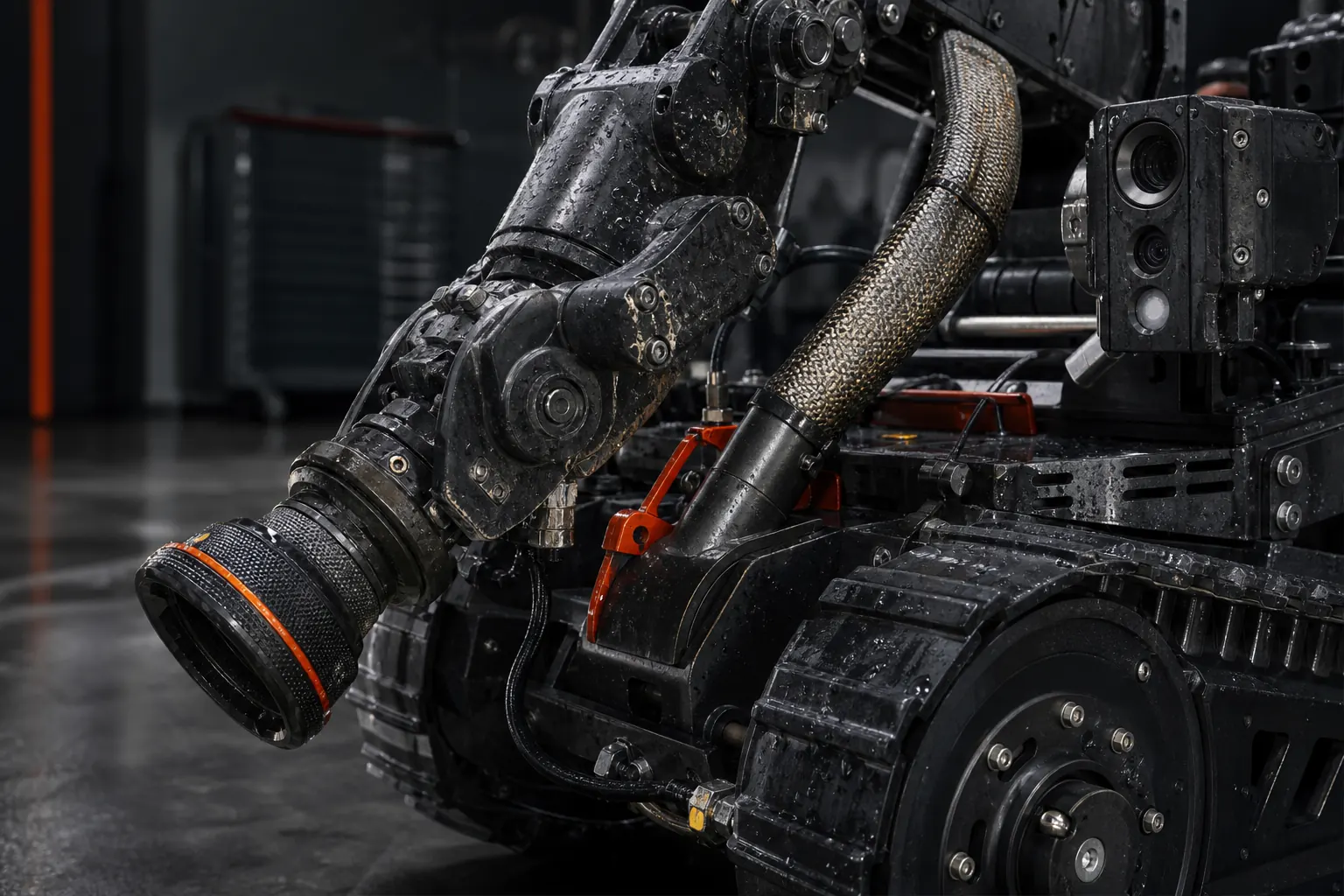
Engineering and manufacturing cycle
From site study and concept engineering to manufacturing, testing, commissioning and operator training.
PRODUCTION / 01
We build an operational tool for emergency teams rather than a standalone vehicle. The engineering cycle covers mechanics, hydraulics, electronics, software, operator station layout and field support documentation.
Incident scenarios, well types, transport constraints, hydrant or pump availability, access roads, heat exposure and response procedures are reviewed before the machine is specified.
The platform is designed around stability, traction, thermal protection, hydraulic power, tooling kinematics, camera placement, telemetry and control logic.
Frame, undercarriage, work mechanisms, fluid circuits, electrical cabinets, operator console and protective housings are produced as one integrated system.
Traction, stability, communication range, video feedback, agent flow, monitor movement, emergency stops and heat-load performance are checked before delivery.
The system is delivered with acceptance procedures, crew training, maintenance guidance and integration into the facility response plan.
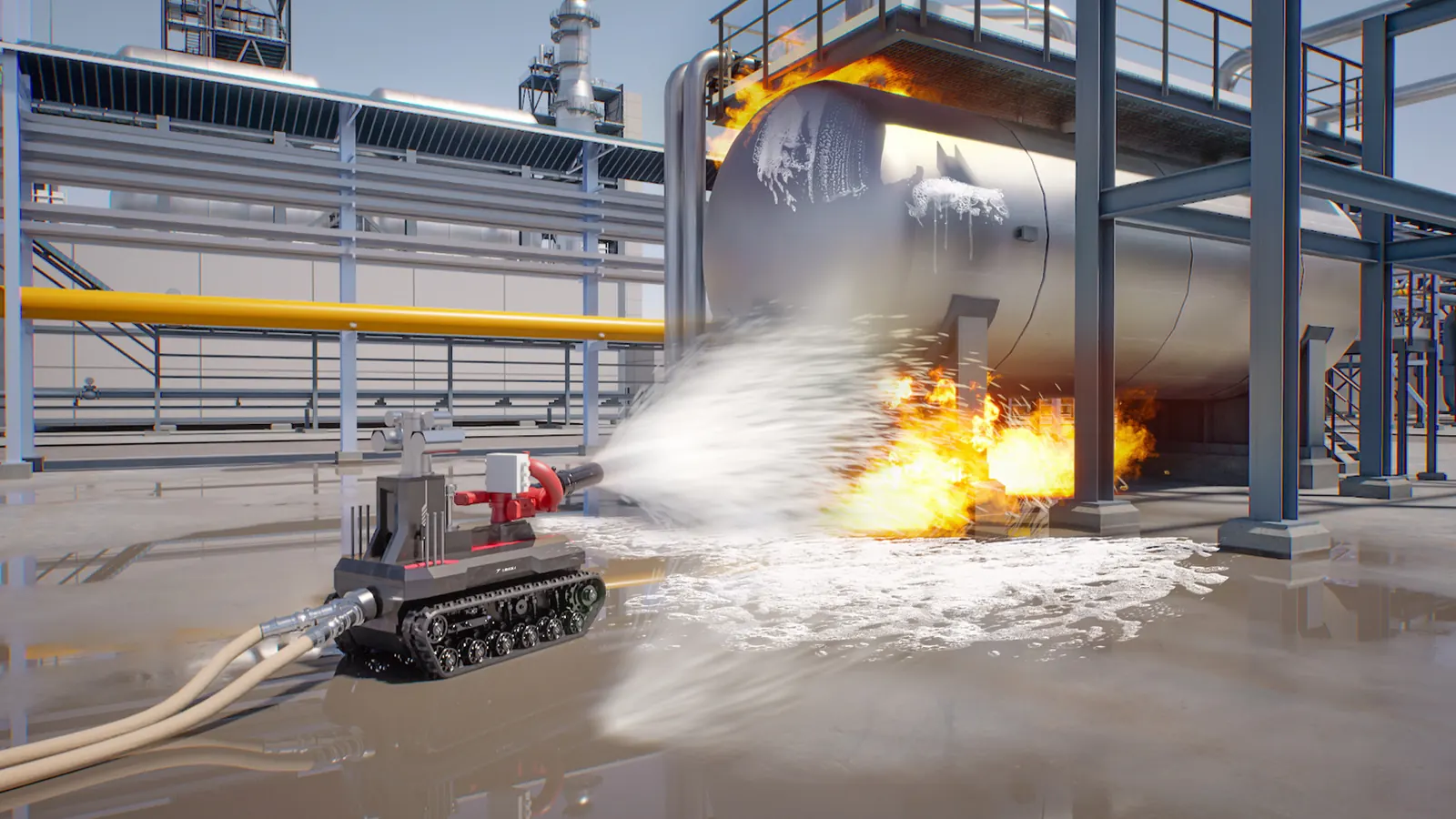
QUALITY / 02
Every robotic configuration is matched to the site. A wellhead fire robot, a compact fire monitor and a reconnaissance unit may share architecture, but each one receives a different thermal package, payload, communication setup and operating procedure.
Production decisions are made from practical field constraints: approach distance, surface conditions, hose routing, pump capacity, expected radiant heat, operator visibility and serviceability after deployment.
The result is not a generic robot, but a response system that emergency crews can transport, deploy, control and maintain under real industrial conditions.
Project discussion